
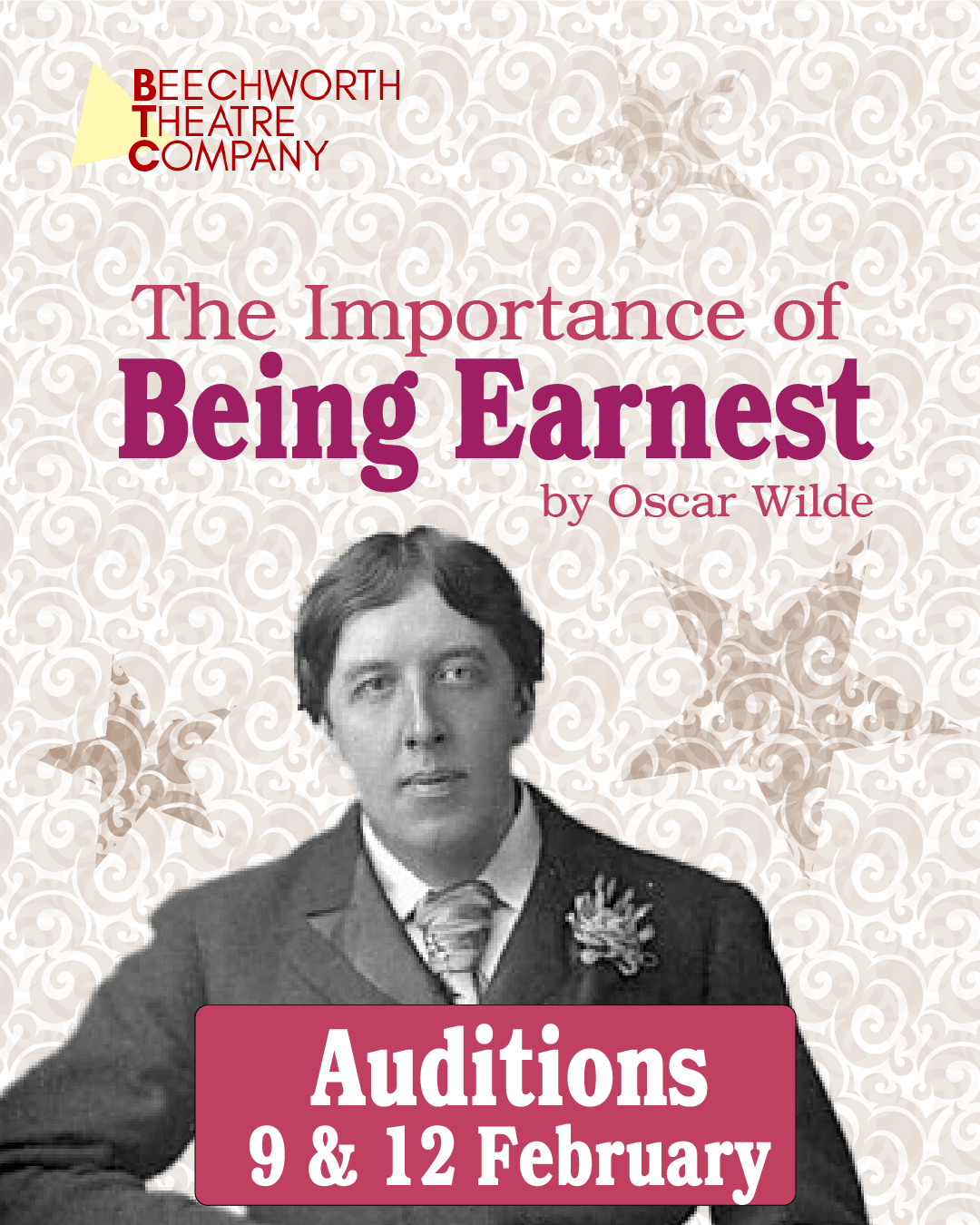
Auditions take place on 9 and 12 February.
The Importance of Being Earnest is probably the most famous of Wilde’s plays. It was first performed in London in 1895.
The full title of the play is The Importance of Being Earnest: A Trivial Comedy for Serious People, and it tells the story of two young men about town (Jack and Algernon) who lead double lives to evade unwanted social obligations, both assuming the name Ernest while wooing the two young women of their affections (Gwendolen and Cecily). The play, celebrated for its wit and repartee, parodies contemporary dramatic norms, gently satirises late Victorian manners, and introduces – in addition to the two pairs of young lovers – the formidable Lady Bracknell, the fussy governess Miss Prism and the benign and scholarly Canon Chasuble.
Characters of the play
John (Jack) Worthing – Upper class English man of 27, Jack was adopted as a baby when found abandoned in a handbag at a railway station in London. Jack has a country property where he lives during the week with his ward, Cecily Mayhew. When Jack visits London, he assumes the name Ernest, however he tells his ward and servants that he is visiting his (non-existent) brother called Ernest. Jack spends a lot of time with Algernon and the two of them are ‘men about town’ – bachelors who live the high life in late Victorian London society. Jack is in love with Gwendolen Fairfax, the daughter of Lady Bracknell, and has come to London to propose.
Algernon Moncrieff – Upper class English man of 25, Algernon is the nephew of Lady Bracknell and lives in an upmarket flat in London. He himself has created an imaginary friend called ‘Bunbury’ whom he visits in the country whenever he needs to avoid awkward situations in town. Algernon knows Jack as Ernest and when he discovers Jack’s deception, he undertakes to visit Jack’s country estate pretending to be Jack’s errant brother, Ernest. Here, he meets Cecily with whom he immediately falls in love.
Lady Bracknell – Upper class English woman of around 50-60, mother of Gwendolen and ‘Aunt Augusta’ to Algernon who is the son of her sister. Lady Bracknell is formidable, absolutely proper, and exudes authority over all who pass her way. She is overly concerned with what is socially acceptable within late Victorian society and has very strong opinions on potential husbands for her daughter.
Gwendolen Fairfax – Lady Bracknell’s daughter, an upper class English woman of around 25. Gwendolen is obsessed with the name Ernest and in love with Jack whom she believes is called Ernest. Gwendolen knows her own mind, pays little heed to her mother, and is determined to marry her ‘Ernest’. She is mindful of society’s rules and expectations but considers these easily overcome.
Cecily Mayhew – Cecily is an orphan who has come to be Jack’s ward. She has just turned 18 but will not legally become ‘of age’ until she turns 35. Up to that point, Jack must give permission for her to marry. Cecily is bored with her lessons, keeps a diary, and has created a fantasy around the (non-existent) brother of Jack – Ernest. She, too, is obsessed with marrying someone called Ernest and has already decided that she is engaged to Jack’s brother. When she meets Algernon, disguised as Ernest, she immediately accepts his actual proposal.
Miss Prism – Cecily’s governess and the original holder of the handbag in which Jack was abandoned. Miss Prism is anywhere between 50 and 60, she is educated and well-spoken.
Canon (Dr) Chasuble – Dr Chasuble is the rector of the small parish church in the village near Jack’s country estate. He is around 50 to 60, educated and refined, good hearted, and very much admires Miss Prism.
Lane – Algernon’s manservant. Lane is dry-witted and sarcastic, he tolerates Algernon’s behaviour and supports him in his deceits about ‘Bunbury-ing’. Age 30 to 60+ well spoken (this role can be combined with the one below)
Merriman – the butler at Jack’s country estate. (can be combined with the role of Lane)